



Italy's rail network can look confusing at first. But most decisions come down to two broad choices: a high-speed train that whisks you between major cities, or a regional train that stitches together smaller towns and local lines. Neither is better in every case. The trick is matching the train to the journey you actually need to make.
The Two Train Families, Plainly
On the high-speed side, you'll see Trenitalia's Frecciarossa and the privately run Italo. Both use Italy's dedicated high-speed lines between major cities. Frecciargento and Frecciabianca are mixed-route services: sometimes fast, sometimes on conventional track. Regional trains—Regionale and Regionale Veloce—are the local workhorses. They stop more often, connect small stations, and usually run on conventional lines. Intercity trains sit in the middle: faster than regional, cheaper than high-speed, and useful on longer routes not served by the fast lines.
Speed and Routing: Where Each Train Shines
High-speed trains are built for distance. Rome to Florence, Milan to Bologna, Naples to Rome: these are routes where the fast lines make a real difference. You trade a few stops for a much shorter journey, and you usually arrive in a major station close to the center. If your trip is between two big cities and time matters, high-speed is often the obvious choice.
Regional trains are not slow because they are badly run; they are slow because they stop. A regional train might link a hill town, a market town, and a provincial capital in one journey. That is exactly what makes it useful. If your destination is not on a high-speed line—or if the high-speed station is far from where you want to be—the regional train can win on total travel time.
Watch the routing, not just the journey time. Some high-speed services stop at stations on the edge of town. A regional connection may add a change but put you closer to your hotel. Before booking, look at the exact station names, not just the city. "Rome" can mean Termini or Tiburtina; "Milan" can mean Centrale, Rogoredo, or Garibaldi. The right station can save you a taxi ride or a long walk with bags.
Cost: Dynamic Fares vs Predictable Tickets
High-speed fares work like airline tickets. They are dynamic: book early, travel at quieter times, and choose less flexible conditions, and you can pay far less than the walk-up fare. Leave it late or travel on a popular Friday evening, and the price can climb quickly. The cheapest high-speed fares often come with restrictions—no refunds or limited changes—so read the conditions before you commit.
Regional fares are usually simpler. They are generally set by route and distance rather than demand, so buying weeks ahead rarely changes the base price. That makes regional trains predictable for short hops. It also means you don't need to lock yourself into a specific train far in advance. You can often buy a regional ticket on the day, validate it, and go.
Compare the whole journey, not just the ticket. A cheap high-speed fare to a peripheral station may cost you a bus or taxi into the center. A slightly pricier regional ticket might drop you two streets from your hotel. For two people with bags, convenience has a price too. For several short trips, regional lines are often the sensible choice.
Stations and Access: City Centers and Small Platforms
High-speed trains tend to serve major stations with good connections to local transport. That is a real advantage: you step off in the city center, often with metro, tram, or bus options nearby. But "major station" does not always mean "the station you want." Some high-speed services stop at peripheral stations to avoid a detour into the center. Check the station code and your accommodation before you buy.
Regional trains reach places high-speed trains simply don't. If you are visiting a small town in Tuscany, a village in Umbria, or a coastal spot away from the main line, the regional network is often the only practical rail option. You may need to change at a junction station, and the connection may not be perfectly timed, but the route will usually put you closer to your destination.
Access also matters at the station itself. Large high-speed stations can be busy and spread out; allow extra time to find your platform, especially when changing trains. Smaller regional stations may have few facilities, limited opening hours, or no lift. If you have heavy bags or limited mobility, check access in advance. A short platform and a flight of stairs can turn a simple connection into a struggle.
Luggage and Onboard Rhythm
Neither train type has a baggage check-in. You carry your own bags and keep them near you. On high-speed trains, you will find overhead racks and luggage spaces at the end of the carriage. Space is usually adequate, but it is shared, and large suitcases can be awkward on a full train. There is no strict weight limit in the way there is on a plane, but common sense applies.
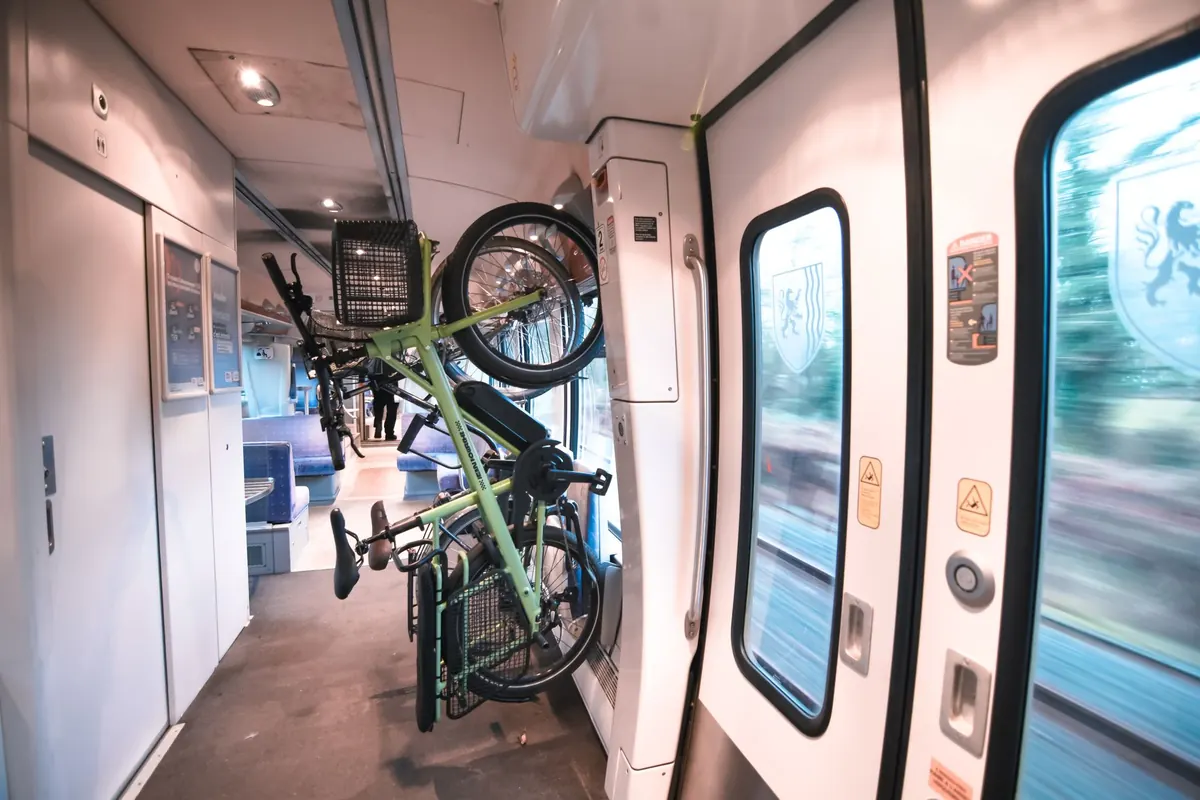
Regional trains have less dedicated luggage space. Overhead racks are smaller, and the area near the doors can fill up quickly. On a crowded commuter service, a big suitcase is inconvenient for you and everyone else. If you are traveling with heavy bags, a high-speed train with a reserved seat and more space is often worth the extra cost. On a short regional hop with a backpack, you will barely notice.
Keep valuables with you, especially on busy regional services. A small daypack at your feet is easier to manage than a large case in the aisle. For families, a stroller can be tricky on regional trains; folding it before boarding helps.
Booking and Validation: A Practical Sequence
The booking process is where beginners often get caught. High-speed tickets include a seat reservation, so you are tied to a specific train and departure time. Regional tickets usually do not include a seat reservation; you can sit wherever is free. That flexibility is useful, but it comes with a rule: validate before you board.
- Check the station, not just the city. Confirm the exact departure and arrival station before you pay.
- Book high-speed early if your dates are fixed. The best fares tend to appear well before departure, especially for popular routes and holiday periods.
- Read the fare conditions. The cheapest high-speed tickets may not be refundable or changeable. If your plans are uncertain, pay for flexibility or choose a regional train.
- Validate paper regional tickets. Stamp them in the machine before boarding. If you bought a digital regional ticket, check whether it needs activation in the app before you get on.
- Arrive with time to spare. High-speed stations can be big. Ten minutes is not enough if you need to find a platform and manage bags.
One more practical point: if you miss a high-speed train, your ticket may not be valid on the next one. Rules vary by fare and operator, so check before you assume. With regional tickets, the main risk is forgetting to validate; conditions can vary by region.
A Simple Rule for Choosing
Use high-speed trains when the journey is long, the cities are major, and your time is worth more than the fare difference. Use regional trains when the destination is small, the distance is short, or the high-speed station would leave you far from where you need to be. For mixed journeys, combine them: take the fast train to a hub, then switch to a regional line for the last stretch.
If you are unsure, price the whole door-to-door trip. Add the cost and time of getting from the station to your accommodation. Then compare. A slower train that drops you in the right place often beats a fast train that leaves you stranded on the edge of town.
Photo: Jean Fourche / Pexels
Related posts
More stories you’ll love reading